Monday, February 17, 2014

How to Manage Bulk Production of Woven Sack Lamination?

Inception of Woven Sack Lamination
Sack material has been in usage for packing different products and it is found to cost effective, strong and preferred for transit purpose. However, with the inception of laminated woven sack material, many industries enjoyed the benefits of packing with this product.

What is Woven sack lamination line?
Lamination line is the coating added inside the sack bag to add more protective features to the sack. This lining material is made of different ingredients such as high density poly ethylene, poly propane, etc and these lining ingredients are chosen based on the industrial requirements.
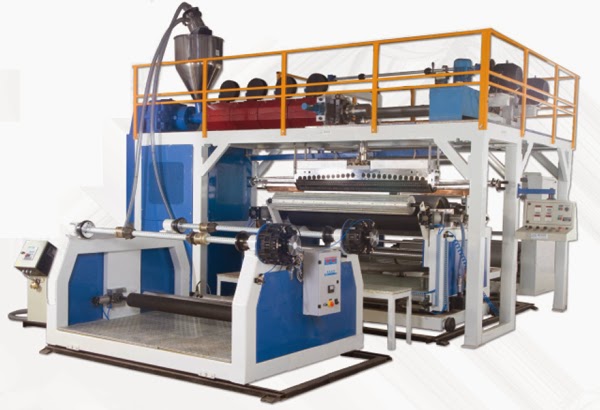
Extrusion Coating Lamination Plant


How Woven Sack line offers perfect lining for packaging?
Woven sack liner provides protection to the products from external influence such as climatic changes, dust, etc. It is also preferred for avoiding leakage and it is quite difficult to easily steal products packed inside liner woven sacks.

Benefits of using Woven Sack with Lamination
Lamination woven sacks are found to be a cost effective packaging solution. For industries that process sugar, salt, fertilizers, rice, etc, they can manage bulk packaging requirement by investing in woven sack lamination machine.

Industries that Apply Laminated Woven Sack Material
Woven sacks found widespread usage in packing rice, salt, sugar, fertilizers, etc. Finding a suitable machine that can produce woven sack lamination with respect to the production and packaging requirement will stay an economic option as it is easy to produce different sizes of woven sack lamination bags with respect to the industrial demand.

Know about Machine that makes bulk production of Woven Sack Lamination
Woven sack lamination machines are designed specifically to add the liner inside the preformed sack. This machine offers economic option in producing protective packaging material and it saves more time in production as well.

Woven Sack Lamination Plant and its Bulk Production Benefits
Lamination plant is certainly a cost effective and fruitful option for producing and supplying woven sacks with liner to different industries. It is also possible to produce liner with sacks of different sizes, thickness by using suitable protective materials.

Where to get cost effective machinery for Woven Sack Lamination Line Machine?
Ocean Extrusions is a pioneer in manufacturing and exporting plastic extrusion machine for different industries. We supply woven sack lamination line and woven sack lamination plant with pp box strapping line or HDPE box strapping line as per the industrial requirement and at competitive price.

Lamination Plant and its advantages
With Lamination plant it becomes quite convenient to produce coating thin layer from different ingredients like HDPE or PP. These lining materials are further applied on sacks made of paper, cotton cloth, woven fabric, etc

Advantages of Liner made from Woven Sack Lamination plant
The application of lining material differs widely as per the compatibility of the product with the packaging material. Hence, single layer to multi layer lamination line are produced as increase in thickness can be depended for higher level of protective features. Further more information about if you want to know about bulk production of woven sack lamination, visit at http://www.oceanextrusions.com/contact-us.html

Conclusion
Lamination liner makes the packaging safe and protective and lamination machines will be the right choice of machinery. Ocean Extrusions offers wide range of liner machines and consumers can choose the liner ingredient and lamination plant for bulk packaging requirement.

This article has been taken from Source - http://blog.oceanextrusions.com/how-to-manage-bulk-production-of-woven-sack-lamination/

Wednesday, February 12, 2014

Do you know that the Resistance Property of Blown Films gets enhanced when processed for Multi-Layer Form?

Popularity of Blown Film in Packaging Industry
Plastic remains an important ingredient in packaging sector. Comparing the resistance and protection properties, blending plastic and flexible materials with polymers gives out excellent heat and moisture resistant properties.

Significance of Extrusion in making Blown Films
Extrusion is the process of blending polymers with plastic which is then turned to molten condition and send through a extruder to obtain film bubbles of the desired diameter. This extrusion technology stays very advantageous as it increase the barrier property of the packaging films.
PP-TQ Blown Film Plant

Ingredients added in Blown Film Manufacturing
Blown film is made by blending plastic with polymers which is then transformed into polyolefin plastics, polyethylene, etc. The blend enhances the flexibility of the filming material thus variety of blown films is made in accordance with the packaging requirement of respective industries.

Properties of Blown Film
Blown films are flexible for shaping and a variety of polymers such as LDPE, HDPE, PE, etc can be treated to obtain blown films. This product has several beneficial properties such as high tensile strength, hear and moisture resistance texture, etc.

Resistant Property
Blown films applied in food industry is selected based on is resistance property. The blown film in general stays tough to react with heat and damp condition and the inclusion of polymers make it flame and UV resistance, antibacterial and antifungal resistant as well.

Enhancing Layering in Blown Film Manufacturing
The thickness of blown films can be enhanced with the help of extrusion technology. The production rate of two layered, three layered and multilayered blown film requires different time span in order to obtain the required thickness and it is done by applying co-extrusion technology.

Industrial applications of Mono Layer Blown Film line
Blown film is also applied as film line in packaging as lining gives additional strength to the outer material and keeps the product safe from external atmospheric influence. Mono layer blown film line acts as a lamination for jute bags, aluminum foils, woven sacks, etc

Two layer and three layer Blown Films and its resistance capabilities
Double or two layer blown film line is little thicker than single layer blown film and it stays very useful in packaging industries that produces shopping bags, liners for jute bags, lamination films as well as biodegradable films.

Application benefits of Multilayered Blown Film
Multilayer blown films are many times thicker and tougher than mono layer blown films. It is widely applied for its puncture resistance and dart impact strength properties. Some of the industries that benefit from multi-layer blown films lines are beverages, edible oil, instant tea, and many liquid products.

PPTQ Blown Film Machine
PPTQ blown film machine is applied to obtain high quality of tough blown films that can be used to obtain complete moisture resistance and sealing properties. Food industry finds a great percentage of application of PPTQ blown film line.

Conclusion
Blown film and blown film line manufacturers like Ocean Extrusions offer high quality machinery to produce wide range of blown films that are then used for packaging industry. These machines can produce different types of blown films without any compromise made in its resistance properties.

This article has been taken from Source - http://blog.oceanextrusions.com/resistance-property-of-blown-films-gets-enhanced-when-processed-for-multi-layer-form/

Friday, January 24, 2014

Enhance Production Efficiency and Get Returns Using the Paper Lamination Machine


Every business or company seeking to increase their profits must use paper lamination machine. These machines are developed professionally and fabricated using high grade basic material.  Latest technology is incorporate to meets industry and market demands. Machine is designed to meet client demand such as greetings cards, poster, folding boxes among others. These machines offer uniqueness features such as easy mode operation, lower power consumption, cheap to maintain and durability. They are available in various designs as per client needs. Laminating product is a great option that an organization can achieve efficiency and maximize profit. Through this machine product are protected from wear and tear. The machine can be large stationed or small movable machine.

Mechanism of Operation of Paper Lamination Machine and Technical specifications.
A paper laminating machine has the following technical specifications;
  • Extended Feeding Table that enhance fast and lower work amount due to it sufficient frontage.
  • Variable Speed DC motor with panel.
  •  Wrinkle Free Lamination of Film.
  • Machine is also fitting for strip lamination
  • Hard Chrome Rollers.
  • With all complete Standard Accessories.
 First the laminated machine is loaded with laminating film, the machine give direction on every step to be followed while inserting the roll of film. Power the paper laminating machine on so as it can warm up. It has a lights signal that directs when the machine is on and when the machine is ready to laminate. Prepare the paper or the item to be laminated by trimming and cutting it to desired sizes. This enables the client to get quality product depending on design they need.

Special Benefits of Using Paper Lamination.
  • It has well Extended Feeding Table that enhances fast and lower work intensity while laminating.
  • It offers a high quality laminate as its finished products have a smooth edges and high greatness.
  • The whole structure of machine is compact, with attractive form and high working efficiency.
  • Preserver items from tear and wear for a long time.
  • Face and bottom paper are adjustable and hence make it easy to laminate.
Role of Paper Lamination in Packaging Industry
Paper laminating machine is an effective machine bodily used in packing industry. It’s suitable for medium and small focused manufactures. The machine firmly sticks paper without rumple and is of high quality. Their advance technological feature enhances high precision, international standards, and sensible layout in packaging. Laminated packages are able to stay for a longer period without an organization occurring extra cost. They are durable and enable the packaging industries to maximize profit.

Advantages of Paper Lamination over Other Systems
  • It is easy to maintain compared to other laminating machines.
  • The machine has advance design with latest technology to meet all client demands.
  • The machine is affordable.
  • It is easy to operate compared to other laminating machine.
  • They are durable.
  • Paper laminating machine have lower power utilization.
Further more information about Paper Lamination in Packaging Industry, visit –http://www.oceanextrusions.com/contact-us.html

Conclusion
The paper laminating machines are professionally fabricated with high grade basic materials.  Latest expertise is integrated to meets industry and market demands. Lamination is preserves items for a long time for example bulletin boards, posters, licenses among many others. The machine has the following features; Extended Feeding Table, Variable Speed DC motor with panel, Wrinkle Free Lamination of Film, and Hard Chrome Rollers. Its special benefit includes durability, easy mode operation and lower energy consumption among many others.

This article has been written & posted by Mr. Mrunal Ramanuj.

Wednesday, September 25, 2013

Plastic Extrusions – Overcoming The Rest Of The Business

Plastic Extrusions in Industry

This is the process of converting raw material plastic often called resin into various forms of finished products. The plastic extrusion process is usually done in high volume and is a continuous process which depending on the targeted end product ,can produce products such as plastic pipes, plastic rails, polythene sheets, plastic insulation material and even plastic containers. This process takes place without changing the inherent properties of the plastic material. The plastic extrusion process has become very important in today’s manufacturing as well as environmental management because it has enabled the substitution of expensive metallic products with plastics such as tanks, and also enabled the recycling of plastics thereby reducing plastic accumulation in the environment.

Process Related to Plastic Extrusion

  • Sourcing of raw material. Raw material for the plastic extrusion process is supplied in the form of resins called pellets which are made up of polycarbonate material. These pellets could be derived from unused plastic material or from recycled plastic. In the process of manufacture of resin pellets, additives may be added to improve their color and even their structural qualities.
  • The extrusion process. It involves feeding the pellets or resins by gravity to a hoper and into the extruder. This is where additives are added. Due to the conical shape of the hoper the material is directed to the other end by gravity where it meets the rotating screw. This directs the beads forward into a heated barrel. The barrel has three heating stages to allow gradual heating of the beads to up to 200 degrees to a set temperature depending on the material being manufactured. Gradual heating also avoids altering the structure of the polymer being used in production. The plastic in molten state passes through a screen removing impurities, to a breaker plate which converts the rotating motion of particles to longitudinal motion. From this stage the particles enter what is called a die and this is where the shape or the design of the final product is obtained from. Any shape can be obtained and it is important to maintain a continuous profile. The final stage now is cooling which involves pulling the unfinished product through a cold water bath.

Tolerances in plastic extrusion

This is the range given or that should be observed during the plastic extrusion process. This includes the length, width and even the thickness of the final product required. There is great variability in the tolerances of the extrusion processes especially due materials used, the cooling rate and extrusion process used. Faster cooling materials have stricter tolerances. The challenge of tolerances can be overcome through more sophisticated calibration and minimizing the pockets of the final product (slower cooling in pockets).The effectiveness of the cooling process directly affects the tolerance.

Forms of plastic extrusions

The plastic extrusion process comes in various forms such as the dies extrusion whereby the final product take the shape of a mould or die; Sizing products whereby the final product takes the shape of the bands situated after the die; sheet extrusion where by cooling is done by passing the product through cooling wheels to achieve sheets of plastic and tubes extrusion whereby when resin is at the die point, it is forced through tubes to give tube forms on cooling. Polythene bags are also made through this procedure. For More Information Visit - http://www.oceanextrusions.com/profile.html
Plastic extrusion processes are a great innovation in today’s economy as the use of plastics is increasing day by day. This is more so because plastics are replacing even metal and wood in industry.


This article has been written & posted by Mr. Mrunal Ramanuj.

Tuesday, August 13, 2013

Different Forms of Plastic Extrusion Machinery used for Blown Film Production

Plastic Extrusion Machinery for Blown Film Production

Plastic extrusion is a process whereby plastics are melted and joined to form a continuous profile. The extrusion machinery produces pipes, window frames, weather stripping, plastic films and wire insulation among others. In the plastic extrusion process raw thermoplastic material is fed into the extruder’s barrel through the mounted hopper.

This process is in a way similar to the plastic injection molding in terms of extrusion technology. The material that is fed into the barrel moves by gravity and reaches the rotating screw which forces the plastics into the barrel which has been heated to the required temperature. The plastic beads are the melted by the barrel in a gradual manner under controlled temperature. Plastic, which is molten gets out of the plastic extruder screw and goes through a screen pack which eliminates contaminants, and into the plastic extruder die which produces the final results. After these the end product is cooled using a water bath. Plastic extruders are mostly used in preparing recycled plastic wastes and materials after they are cleaned, sorted and chopped into resin beads.

The Blow Film Extrusion

The blow film line is mostly applicable for general plastics and can give various ranges of or forms of film extrusions. The blow film line is designed in an upright or horizontal manner to cater for upward, downward and horizontal extrusion. Blow film extrusion can be used to make single large films, two smaller films or even tubes that can be transformed into bags.

The blow film extrusion process is made of four main stages: the polymer in form of pellets are melted together forming a viscous fluid which is continuous. In the molten state the material is forced through an annular die. Injection of air is done midway the die causing the melted extrusion to form a bubble which is uniform in thickness. This is followed by pulling upwards the bubble from the die and the film cooled from inside to give the bubble uniform diameter. The bubble is then passed through a roller in the blow film line and gets flattened making two flat films. The multilayer blow film line is suitable for food packaging and industrial products, and agricultural and technical applications.

The Future Market for Blown Film Extrusion Machine

There has been a constant growth in the manufacture of high quality plastic extrusion machines with new designs been proposed especially for the flexible packaging industries. Market demand for plastic extrusion machinery is consistently on the increase meaning that in the future it is expected that plastic extrusion machines will be made with more sophisticated features including incorporation of more layers in composite plastics. To Know more about Plastic Extrusion Machinery, visit – http://www.oceanextrusions.com/

The multilayered structures provide more value and growth in the industry. Marketing demands in the recent past has been increasing especially in the food processing and packaging industry. Future markets will embrace more of the possible nine layered blow films which will produce even more properties such as flavor and aroma preservation, sunlight resistance, excellent barrier effect and good sealing properties. Increased extrusion machinery layers are composed an organized and complex blown film plant which must be maintained frequently.

This article has been taken from Source: - http://blog.oceanextrusions.com/different-forms-of-plastic-extrusion-machinery-used-for-blown-film-production/

Sunday, August 11, 2013

All You Need To Know About Adhesive Lamination

When looking for an ideal adhesive lamination machine, several factors must be considered. Among them is high quality bond strength, good wet tack, can be used for wood lamination, is fast drying producing no wrinkles, bonds easily and many others. A good quality machine for industrial use is one that is an all-purpose lamination or coating machine with perfect functionality.

What is adhesive lamination and how does it work?
Adhesive lamination is a finishing process where you seal off with film. It can be done with a variety of finishes sometimes with color enhancement but the main goal is to enhance durability or a desired appearance as well as comfort. The adhesive coating plant works by different techniques depending on the material. Different coating plants are able to perform hot melt adhesive bonding, an application that is not prone to effects of moisture, has high adhesion capabilities and is good on short duration outdoor use materials. This approach also allows for instant lamination, has no need for moisture and upon cooling, the material is ready for immediate use. Other machines are able to coat circular woven fabrics, producing multiple layers of lamination. Spray coating is also another lamination technique commonly used on non-woven materials. A powder spray gun is used and is able to penetrate well in to the surface of the material. Some of these machines can hold more than one spay gun, thus can be of great advantage and can meet your high industrial demands. Lamination adhesives used can be water based or solvent based. Dry adhesives are appropriate for use in fast machines. Water based ones are cheaper and can be used for lamination as well as adhesive films. Solvent based ones on the other hand are best suited for outdoor use and offer long term durability since they can confer UV protection. They also work well with both lamination and adhesive films and have high tack qualities. Spray lamination typically works best with water-based or polyurethane adhesives. The plant usually has different units, such as the lamination unit, duckling system, sandwitch unwinder and the surface unwinder.  Click here to know more about Adhesive Lamination.
What are the applications of adhesive lamination for different industries

The industrial uses of adhesive lamination plants are varied, ranging from coating of;

• Paper
• Polyester film
• Cotton fabrics
• Jute
• Plastic
• Aluminum foil
• Woven sacks
• Non-woven fabrics
How do you select the best quality adhesive lamination machine for your industrial needs
hen choosing an adhesive lamination device, focus on an energy efficient, fast and high quality machine. Speed is necessary to boost your maximum production capacity per hour which is normally quantified in kg/hr. It must have smooth feed capabilities which will ensure that the end product after lamination is wrinkle-free. You must certify that the device can deliver the appropriate coating thickness range as per the material you are working with. The machine should be compatible with an adhesive that is not toxic and does not gas.
This article has been taken from Source: - http://blog.oceanextrusions.com/all-you-need-to-know-about-adhesive-lamination/

Wednesday, July 10, 2013

Rotogravure Printing Machine – Best Extrusion Machinery for Packaging & Printing Industry


The rotogravure is a form printing process referred to as intaglio printing process .This process involves engraving an image into an image carrier. The process uses rotary printing press where the image to be printed is engraved onto a cylinder. This process is used for commercial printing of magazines, cardboards aluminum, foil paper and also in product packaging.
From the above definition of rotogravure printing, we can define the rotogravure printing machine as the machine used in the printing process described above.
The modern machine uses a printing cylinder with tiny cells that have been engraved on it. The cells have the ability to retain ink, the pattern and the size that finally reflect the final image of the product.
High speed rotogravure printing machine: This is a fast speed kind of printing machine. The bigger number of rotogravure machines print rolls as opposed to sheets of paper. The machine is the fastest in speed and also the widest in the printing industry. For the maximum level of efficiency, this machine operate at high speeds producing very big diameters and wide rolls.

Applications of Rotogravure Printing Machine:

The roto printing machine is popular and mostly used in the fine arts and photography reproduction sectors because of its high density range in printing.
The printing process is also commonly used in food manufacturing and the packaging sectors. The gravure printing machine can print a wide range of substrates some of which involve polyester, polythene and BOPP among others. The rotogravure machine is most popular in this sector because of its ability to print well on thin films such as nylon and polyester.
The printing process is also applied in manufacture of wall covers and transfer printing. The process has further applications in the security printing, the tobacco sector and generally used the industrial sector.

Important features of the machine

· The rotogravure printing machine is characterized by a single printing unit for each color mostly Cyan, Magenta, Yellow, and Key which is the common printing reference of the color black. The number of units however mainly depends on the color you wish for the final image.
· High density range: the rotogravure printing machine is capable of transferring much more ink to the paper than the typical printing processes. This feature has made the machine popular in fine art, and photography reproduction
· The rotogravure printing machine allowed the ability to transfer ink consistently over a big range of densities at high speeds. This makes it suitable for applications that need high quality images, for example packaging, publishing and decorative printing.
· Long service life: The machine can print cylinders that are long lasting. They last even through large volume runs without the risk of them getting worn out.
· Another characteristic feature of the machine is its low per unit costs running especially in cases with high volume production.
· Good heat conduction.
The sectors where the machine is applicable
The printing machine is used in the following sectors
· In printing magazines that are long run and exceed over a million copies.
· The mail order catalogs also use this printing machine.
· Packaging for consumers
· In furniture making where quality and consistence is privy the printing machine is used to print wallpapers and laminates.
· Newspaper adds inserts, also frequently use this printing machine.
Click here to know more about Rotogravure Printing Machine.
The rotogravure printing machine is well designed to produce high quality images. The cells in the cylinder that allow consistent flow of ink and the engraving of the image on the cylinder all contribute to the high quality of the final images produced by this machine. The printing technique used by the machine is used in the manufacturing and the industrial sectors on large scale. It is therefore among the best printing machines that can be used for high volume production of quality products and images..